
Inside Nairobi’s BAPS Shri Swaminarayan Mandir
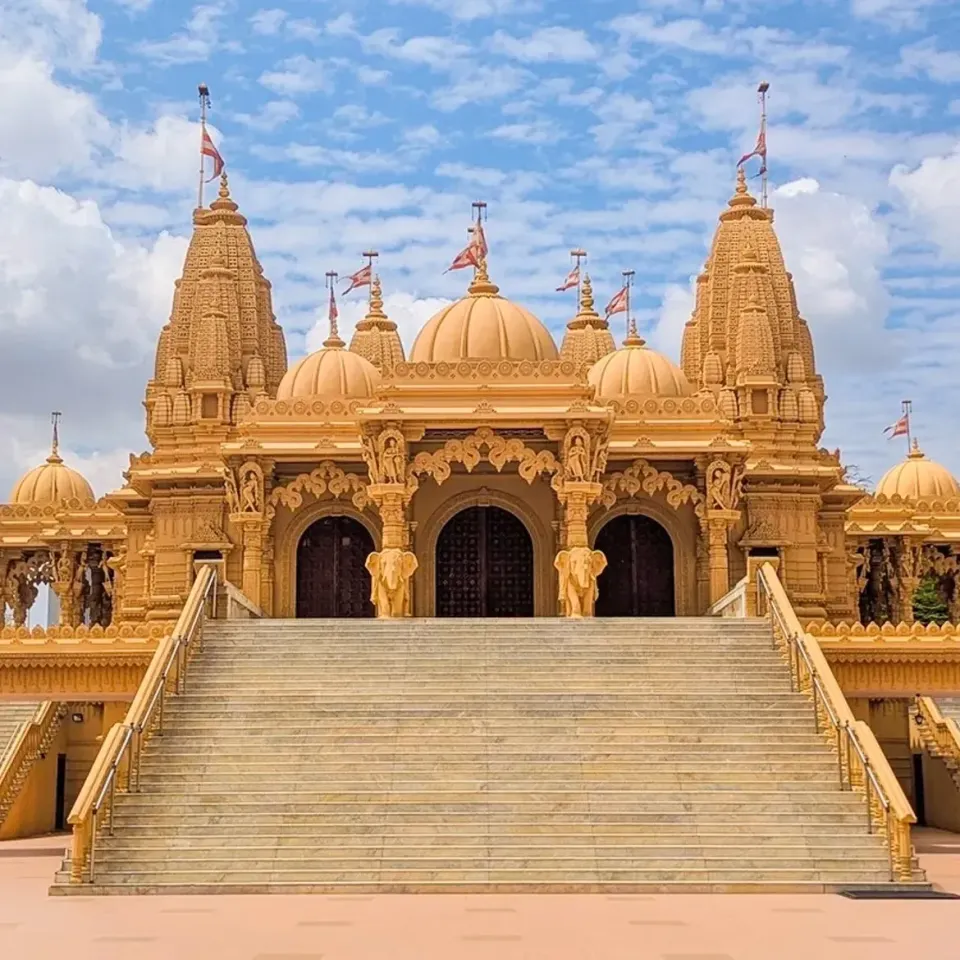
Along Prof. Wangari Maathai Road stands a temple that is far more than an extraordinary piece of architecture. Its history stretches back nearly a century, its materials travelled between Africa and India, hundreds of craftsmen worked on its construction, and inside it is an exhibition designed to take visitors through the history and contributions of Hindu civilization.
There are buildings in Nairobi that are impressive because of their height. Others matter because of what happens inside them.
Then there are places that become interesting because the story of the building itself is almost as remarkable as the building.
The BAPS Shri Swaminarayan Mandir in Nairobi belongs in that last category.
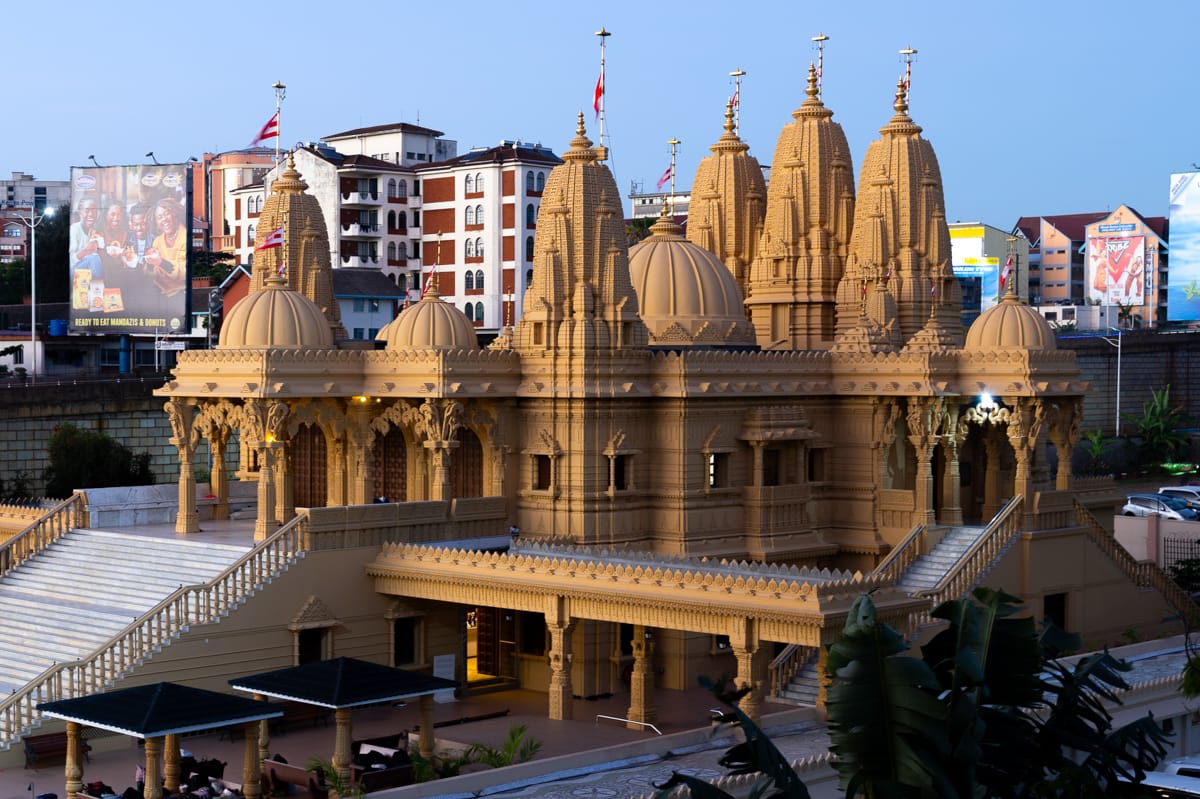
From the outside, it can look as though a piece of India has somehow appeared in the middle of Nairobi. The sandstone, carved pillars, domes and towering shikhars make it immediately recognisable as a traditional Hindu temple.
But that first impression misses most of the story.
The temple was not simply designed in India and shipped to Kenya. African timber was transported to India, where craftsmen carved it. Finished pieces were returned through Mombasa and transported to Nairobi. Local volunteers and experienced craftsmen then helped assemble the enormous collection of individual components.
Inside, the building is also a place of learning. Its Understanding Hinduism exhibition takes visitors beyond religious practice into the history of India, Hindu philosophy, science, medicine, mathematics, astronomy, art and culture.
Its history in Kenya is older still.
The present mandir is the product of a relationship between India and East Africa that began decades before the current building existed.
The BAPS Shri Swaminarayan Mandir stands today as a physical record of how people, ideas, craftsmanship, faith and communities have travelled between Africa and India.
A Story That Began Before The Temple
To understand the Nairobi mandir, you have to go back well before 1999.
BAPS traces the foundations of its satsang, or spiritual fellowship, in Africa to 1927, when devotees connected to the Swaminarayan tradition began establishing a more organised presence in East Africa. Historical BAPS accounts describe Indian migrants, particularly from communities involved in trade and commerce, bringing their religious practices with them as they settled in the region.

In Nairobi, the movement developed through homes, small gatherings and community spaces before eventually establishing dedicated places of worship.
A particularly important milestone came in 1945, when a Swaminarayan mandir was established in Nairobi. BAPS describes this as the first Akshar-Purushottam Swaminarayan Mandir established outside India.
This history matters because it changes the way the 1999 temple should be understood.
The building standing on Prof. Wangari Maathai Road did not represent the arrival of BAPS in Kenya but the culmination of more than half a century of organised religious and community life in East Africa.
In 1955, Yogiji Maharaj inaugurated the first BAPS Swaminarayan mandir on the African continent in Mombasa. Nairobi received another important mandir milestone in 1970, when Yogiji Maharaj inaugurated a Hari Mandir in the Ngara Road area. BAPS records that he envisioned that a much larger and more magnificent mandir would eventually be built in Nairobi.
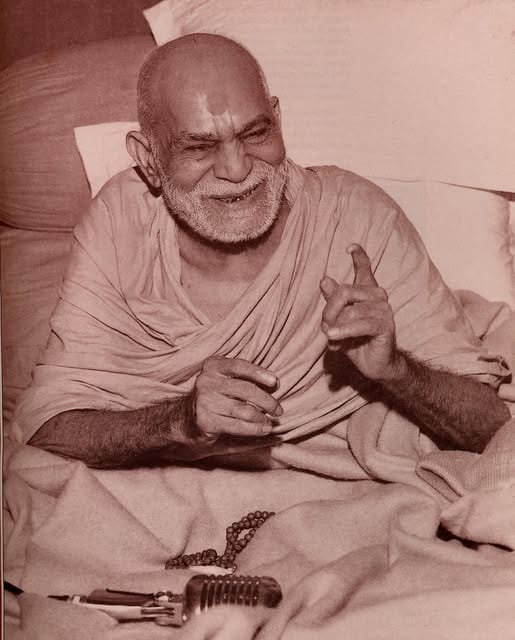
The 1970 building therefore became part of a much longer story, while the current Nairobi mandir would come nearly three decades later.
From Ngara Road To A Landmark In Nairobi
For years, the idea of a larger Nairobi mandir remained just that: an idea.
BAPS's own historical account describes the period after the 1970 mandir as one in which political and social instability, financial difficulties and emigration among some Indian families made the prospect of a major new temple appear distant.
Eventually, however, the project moved forward.
What emerged was not intended to be an ordinary modern building with decorative references to Indian architecture. The mandir was designed according to traditional Hindu architectural principles, particularly the Shilpa Shastras, a body of traditional knowledge concerned with architecture, sculpture and the creation of sacred spaces.
BAPS says that the current Nairobi mandir was dedicated by Pramukh Swami Maharaj on 29 August 1999, after more than one million man-hours had gone into the project.
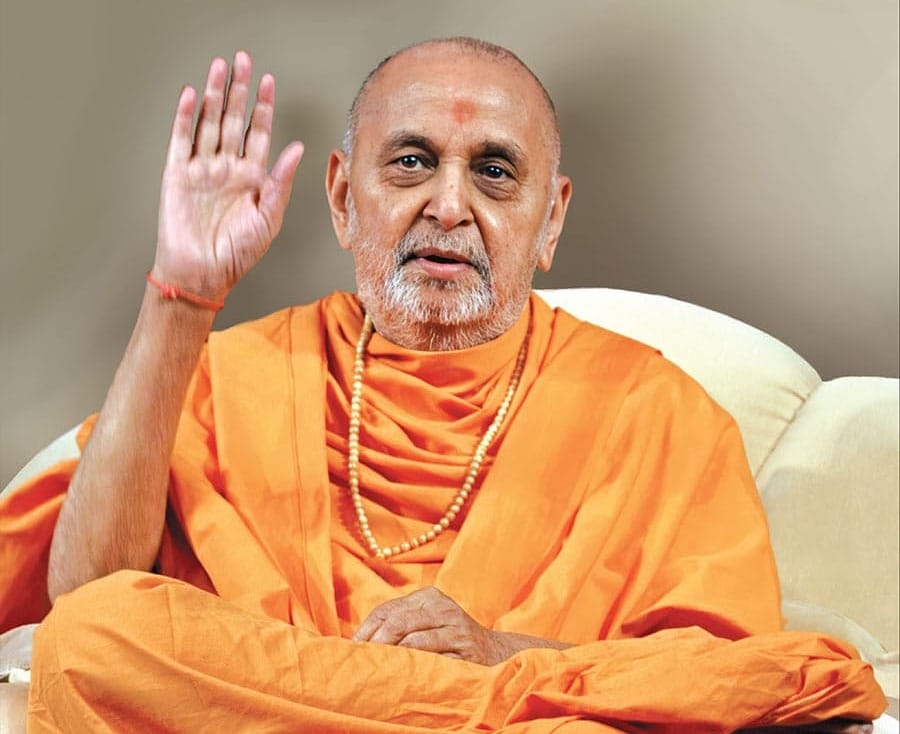
The distinction between the earlier Nairobi temples and the present one is important.
The current mandir was inaugurated in 1999, but the BAPS presence in Nairobi did not begin then. In fact, BAPS's historical records describe the Nairobi mandir as initially established in 1970 and later reopened by Pramukh Swami Maharaj in 1999. Other BAPS historical material records the earlier Nairobi mandir established in 1945.
A Temple Built By Hundreds Of Hands
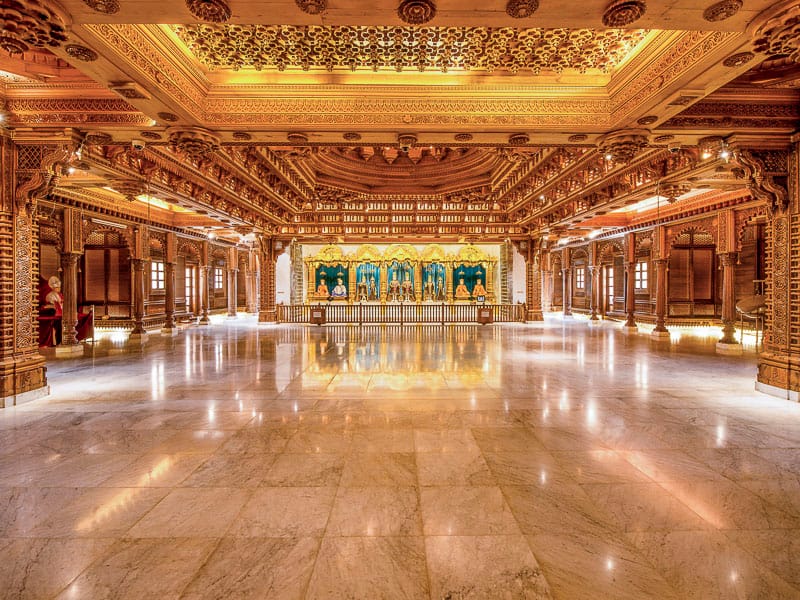
The scale of the project becomes clearer when you start looking at how it was made.
The mandir covers approximately 10,200 square feet. It is about 99 feet wide, 140 feet long and 69 feet high. Its architecture incorporates five shikhars, seven domes, 66 pillars, 40 windows, 23 arches, four balconies and five staircases. BAPS records 80 different designs and 30 different ceiling designs across the building.
There are also more than 6,000 delicate floral designs in wood.
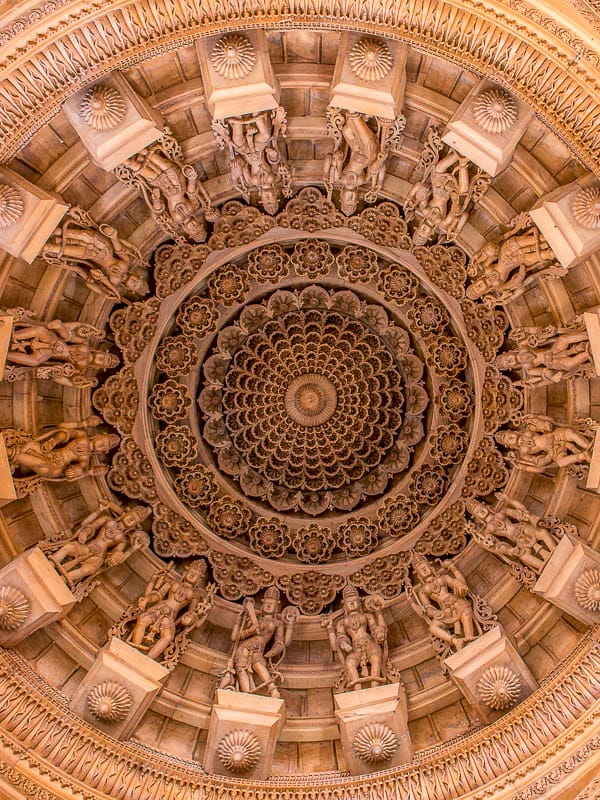
At the busiest point of construction, 235 craftsmen were involved.
More than one million man-hours were spent on the project. BAPS's historical account breaks this down into approximately 950,000 hours by craftsmen and 150,000 hours by devotees and that distinction is reveals that the building was not only constructed by professional artisans. It was also a community project.
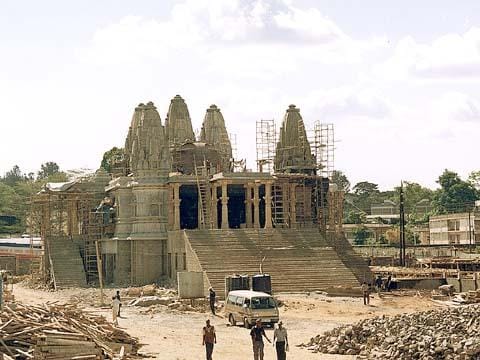
The official photographic record from 1999 shows craftsmen carving stone, volunteers polishing surfaces and members of the women's wing contributing to the finishing work. Young volunteers were also involved in the construction process.
The Wood Took A Remarkable Journey
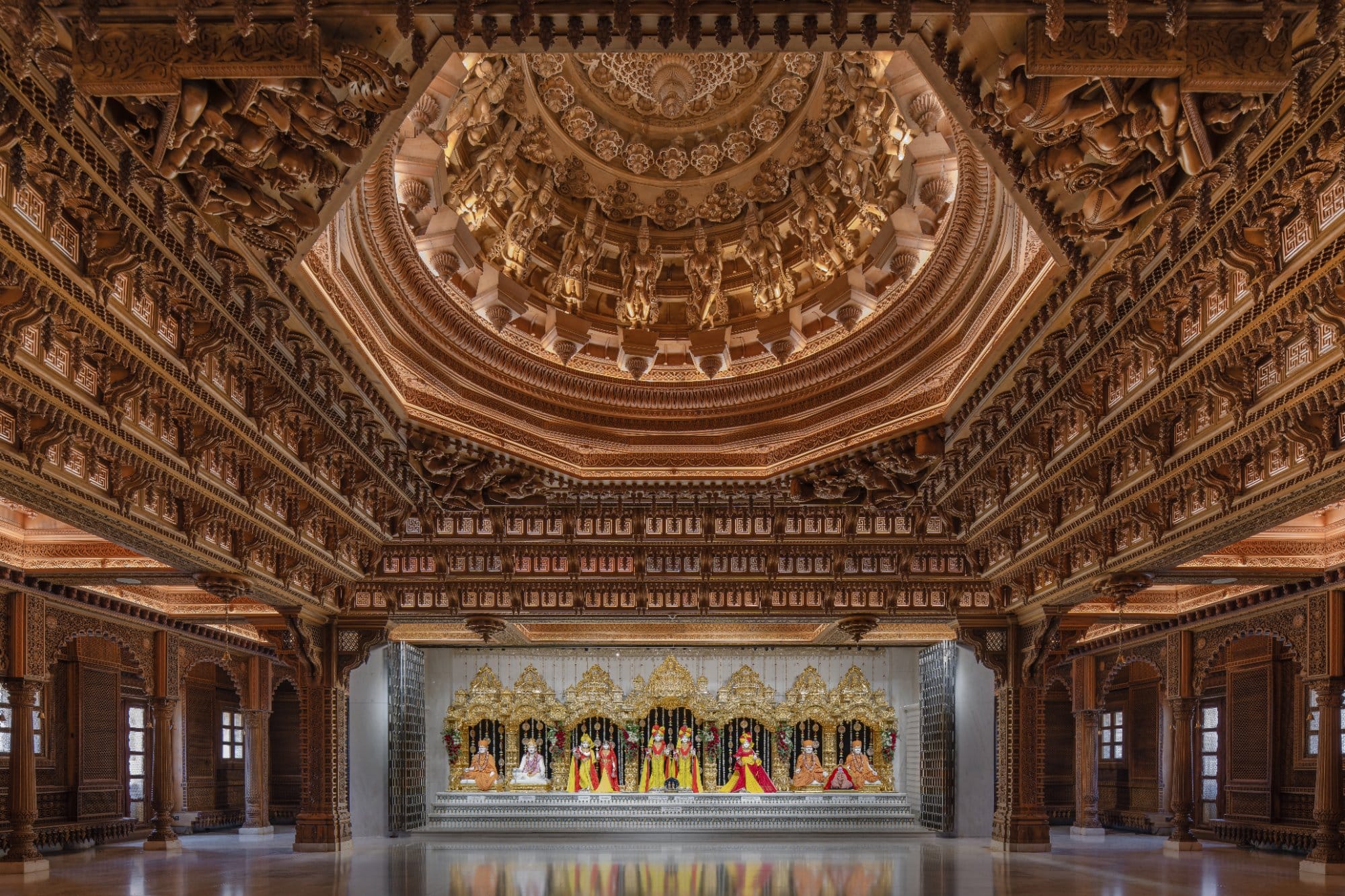
One of the most unusual elements of the mandir is inside. The interior contains an extensive amount of intricately carved wood, including the main dome area, pillars and surrounding structures.
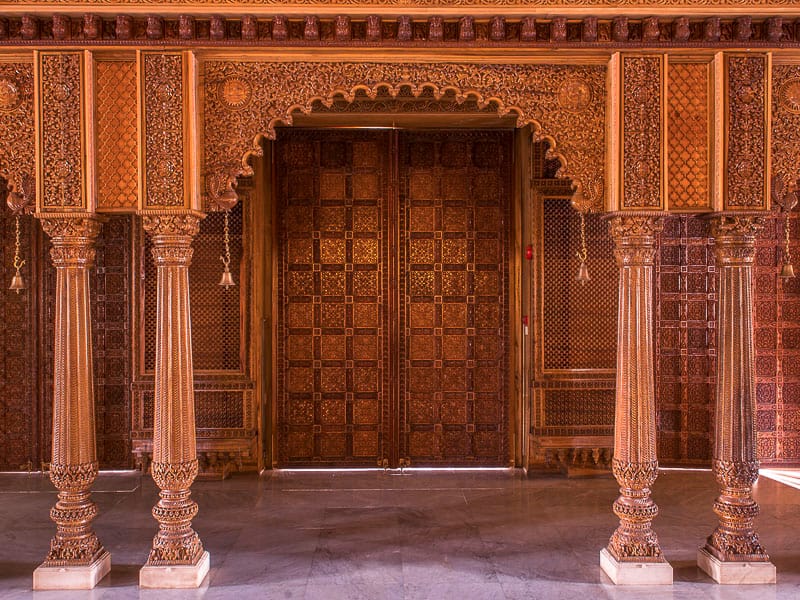
But the story of that wood is more complicated than simply saying that Indian craftsmen carved it.
BAPS selected indigenous African timbers including Elgon Teak, Mvuli, Mahogany and White Oak. The first consignment was sent to India in eight containers in August 1998. A second consignment followed in seven containers in February 1999.
The timber then travelled to India.
Craftsmen working across 32 locations in Gujarat, Maharashtra and Rajasthan transformed it into the elaborate carved pieces required for the temple.
The finished carvings were transported back to East Africa, arriving through Mombasa before making the approximately 500-mile journey by road to Nairobi.
Once they arrived, experienced craftsmen worked on the pieces again, touching them up and assembling the designs.
The result is unusual because the building embodies several geographies at once. That is why the temple is more interesting than a simple description of it as Indian architecture in Kenya. It is the product of movement between two regions.
Why The Wooden Interior Is So Extraordinary
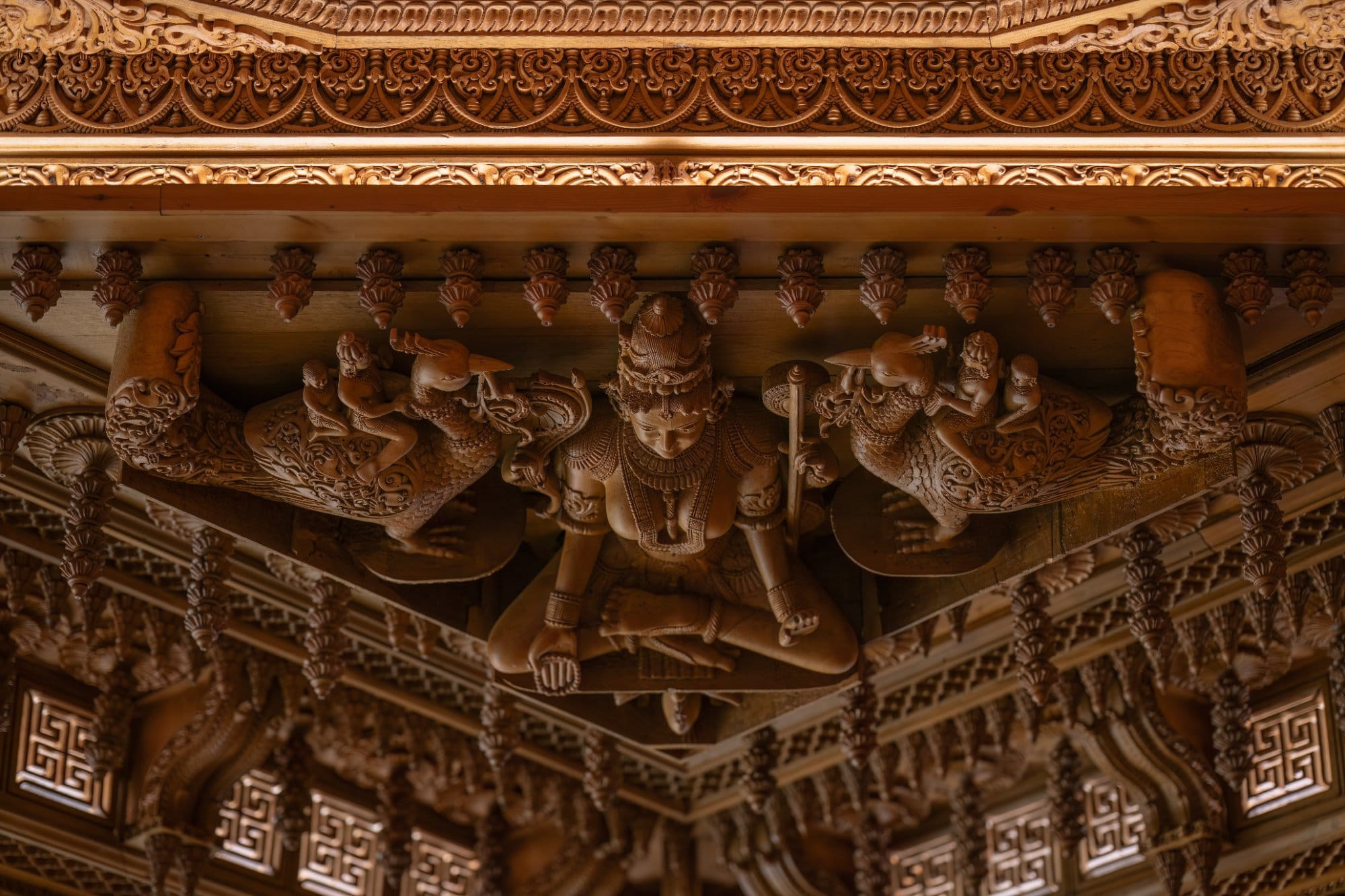
Stone and wood behave very differently when they are carved.
The Chairman of BAPS Kenya explained in a local news feature that working with wood presented its own challenges and that the artisans came from different parts of India. The completed pieces had to be brought together with remarkable precision.
BAPS's own account describes the interior as a major feature of the temple and records the enormous amount of detailed woodwork that went into the dome, pillars and walls.
The craftsmanship is particularly striking because the finished result looks continuous: The carving moves from one section to another, creating the impression that the entire interior was conceived as one enormous work of art.
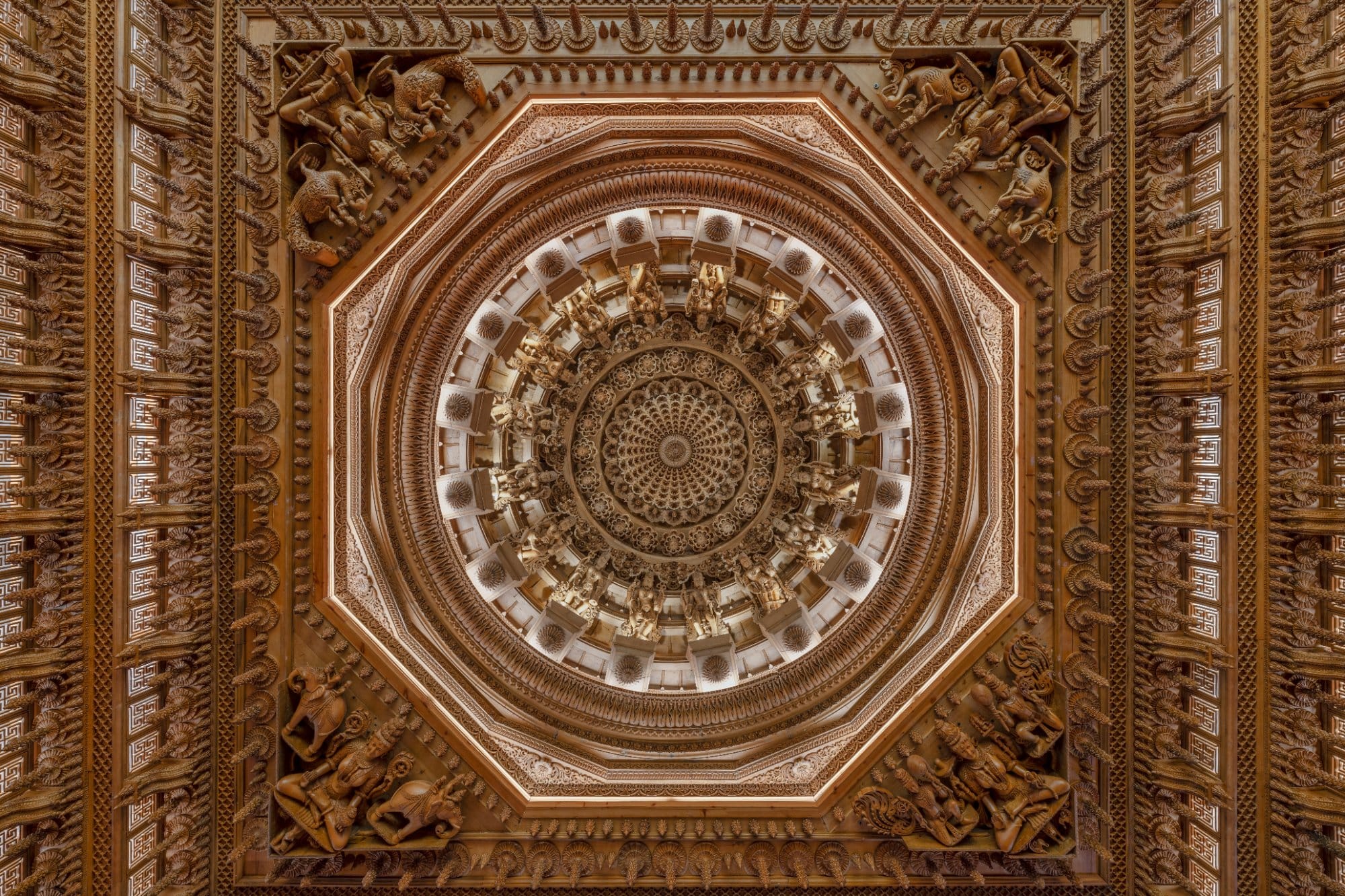
The original project also included a carved wooden dome described by BAPS as the only such carved wooden dome in Kenya and possibly Africa.
350 Tonnes Of Jaisalmer Stone
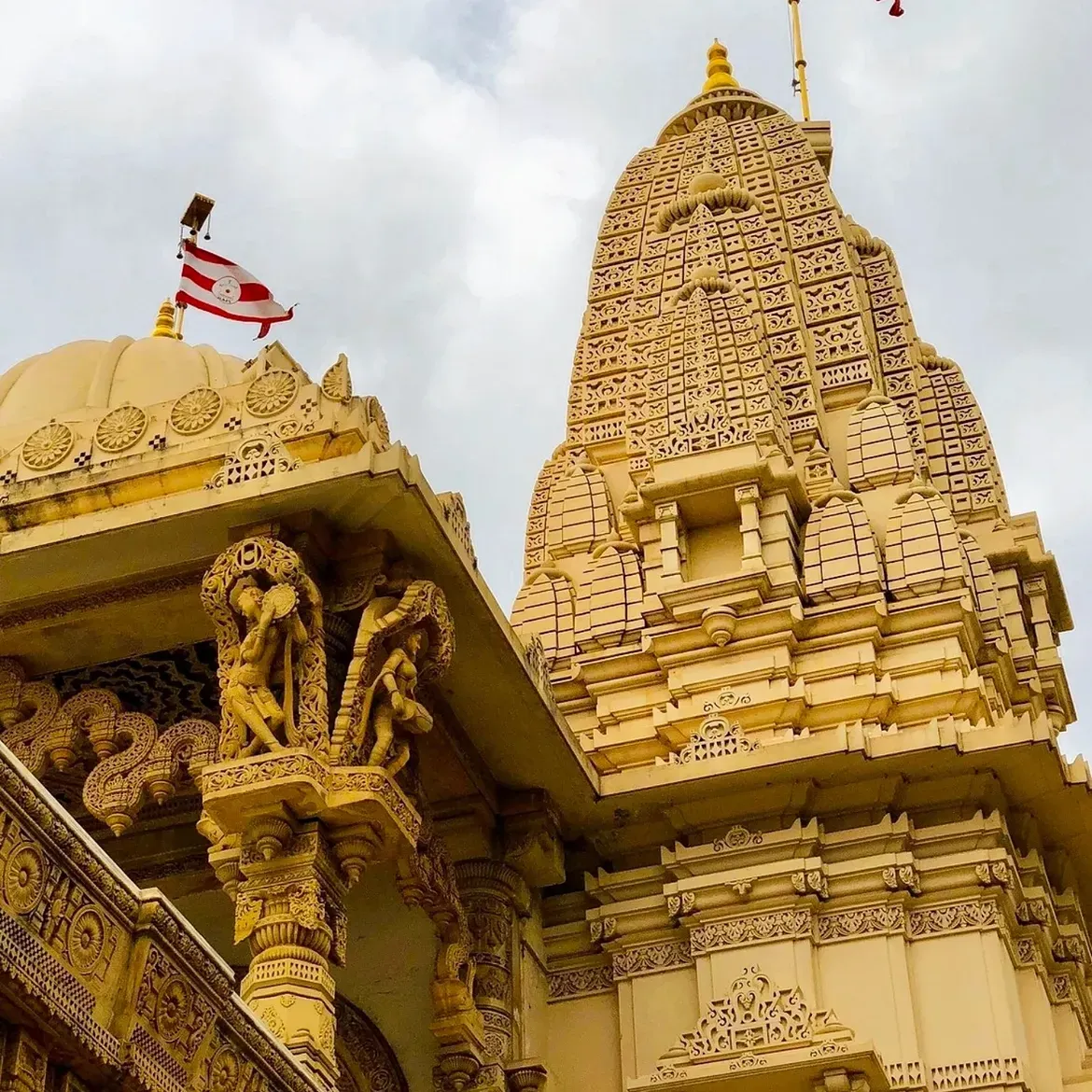
The exterior tells another story. BAPS records approximately 16,500 square feet of Jaisalmer yellow stone, weighing around 350 tonnes. The project also used approximately 13,200 square feet of Carrara marble from Italy and 10,000 square feet of Kota stone from India.
The yellow sandstone gives the building its distinctive warm appearance.
Its surface is covered with layers of carved detail, from floral patterns to architectural motifs and figures.
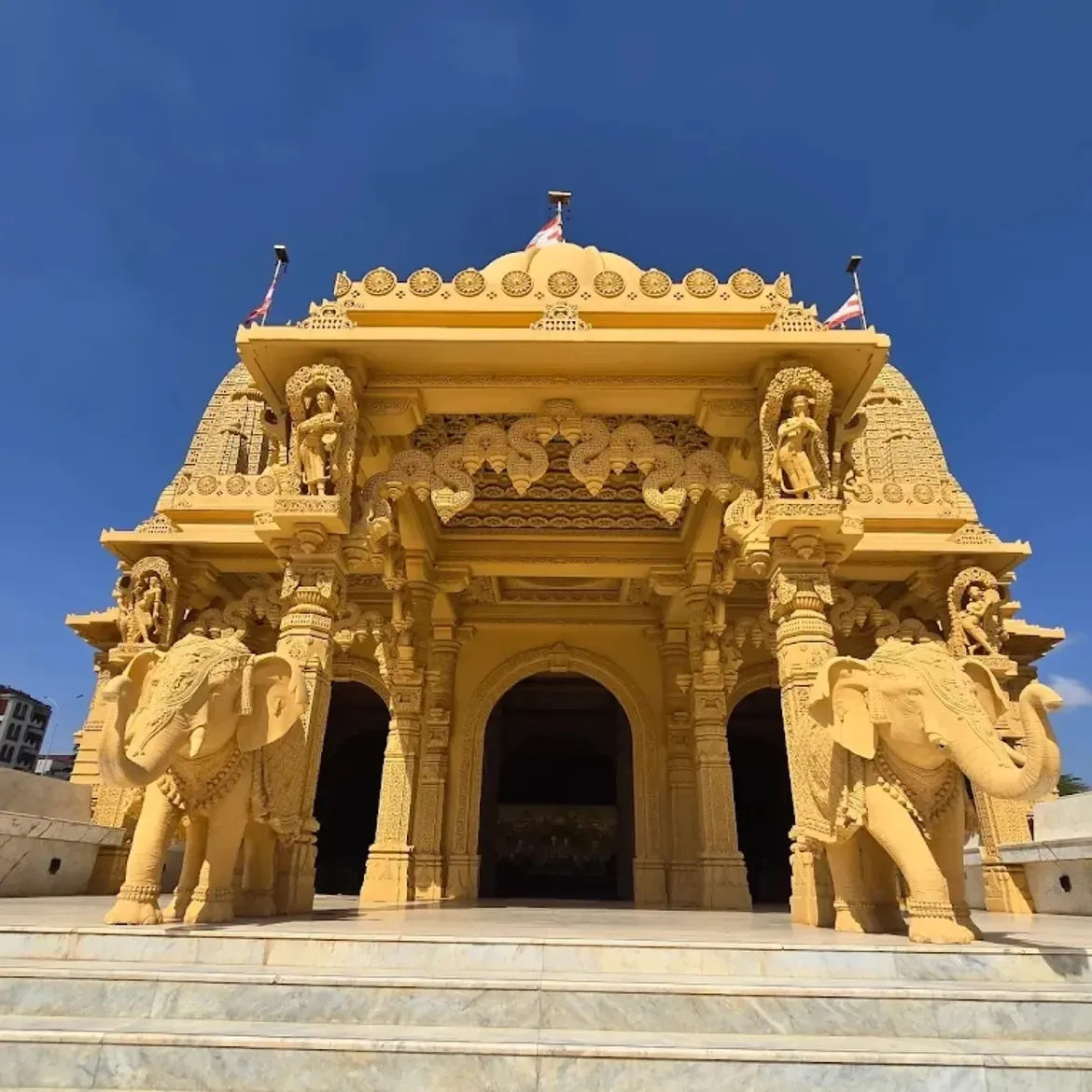
From a distance, the temple looks unified. Up close, it becomes almost impossible to take in every individual detail.
The Architecture Was Recognised In Kenya
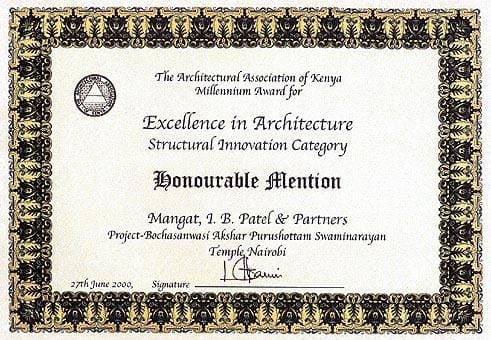
The architectural significance of the temple was recognised soon after its completion.
In 2000, the BAPS Shri Swaminarayan Mandir received the Millennium Award for Excellence in Architecture in the structural innovation category.
The award was granted by the Architectural Society of Kenya, with a judging panel that included architects from Egypt, Nigeria and South Africa.
The award is significant because the temple was being recognized as architecture.
A Temple Of Knowledge
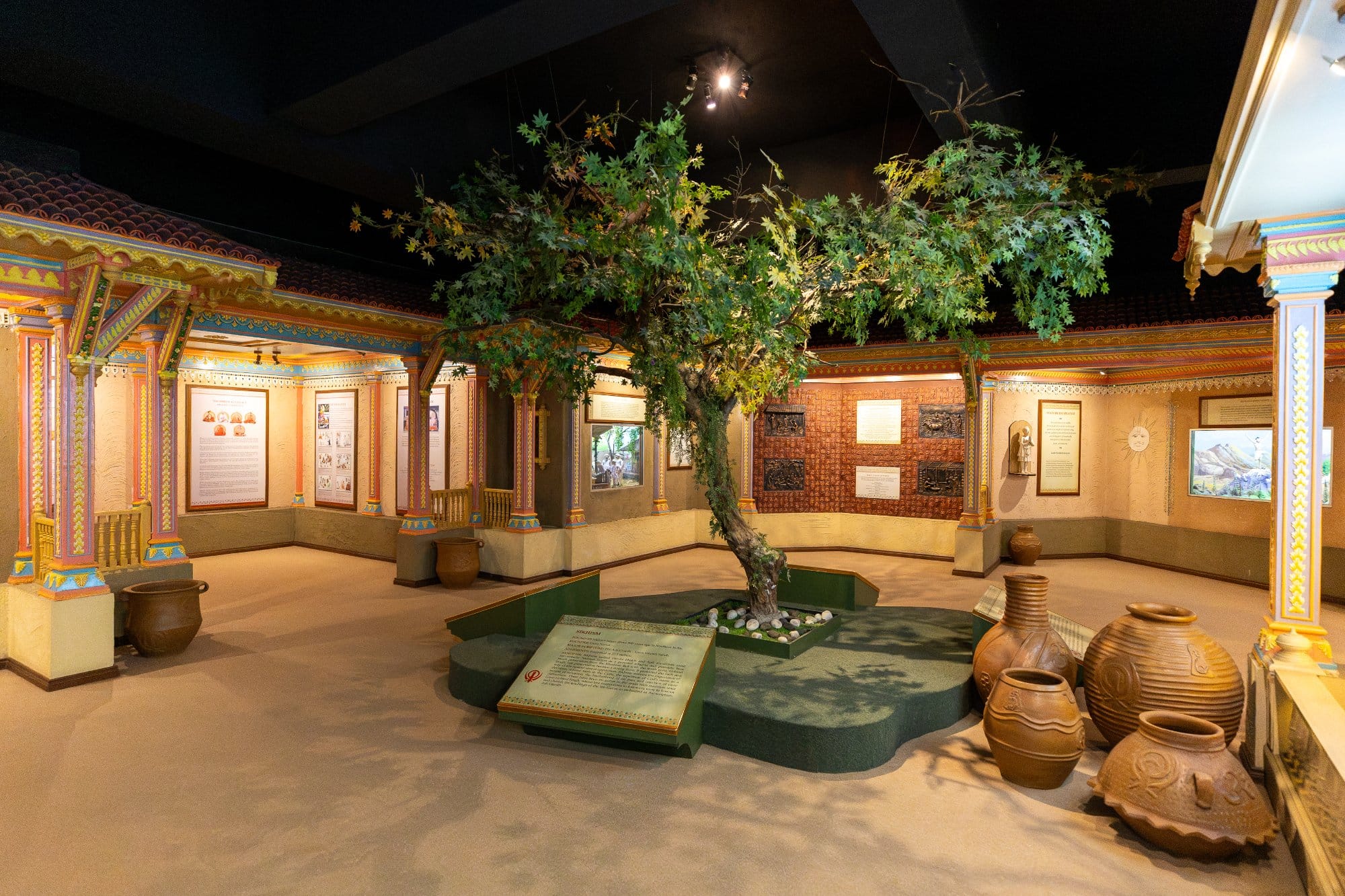
Inside the complex is Understanding Hinduism, an exhibition designed to introduce visitors to the history, beliefs, heritage and contributions associated with Hinduism.
BAPS describes it as a well-researched multimedia exhibition presenting facts, figures and information through panels, translites, photographs, dioramas, audiovisual displays, three-dimensional forms, fibreglass figures, wood carvings and paper crafts.
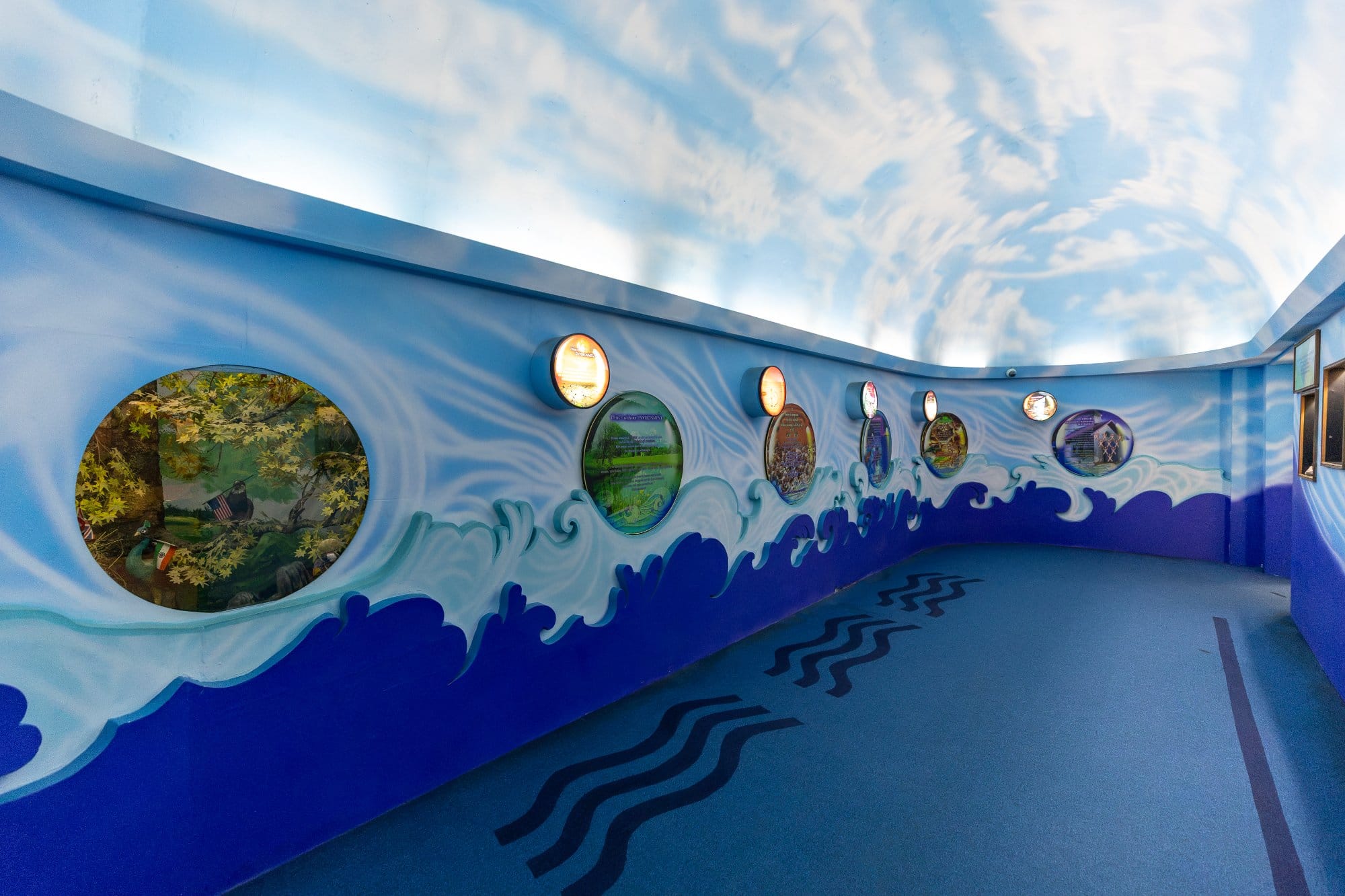
The exhibition's stated purpose is educational. BAPS describes the wider Understanding Hinduism and Glorious India exhibitions as introductions to Hindu Sanatan Dharma and India's contributions to society. It says they are displayed at BAPS mandirs around the world, including Nairobi, while also being presented temporarily at fairs, festivals and conventions.
So a visitor is not only entering a place of worship, but also entering a cultural and educational space.
A Journey Through India
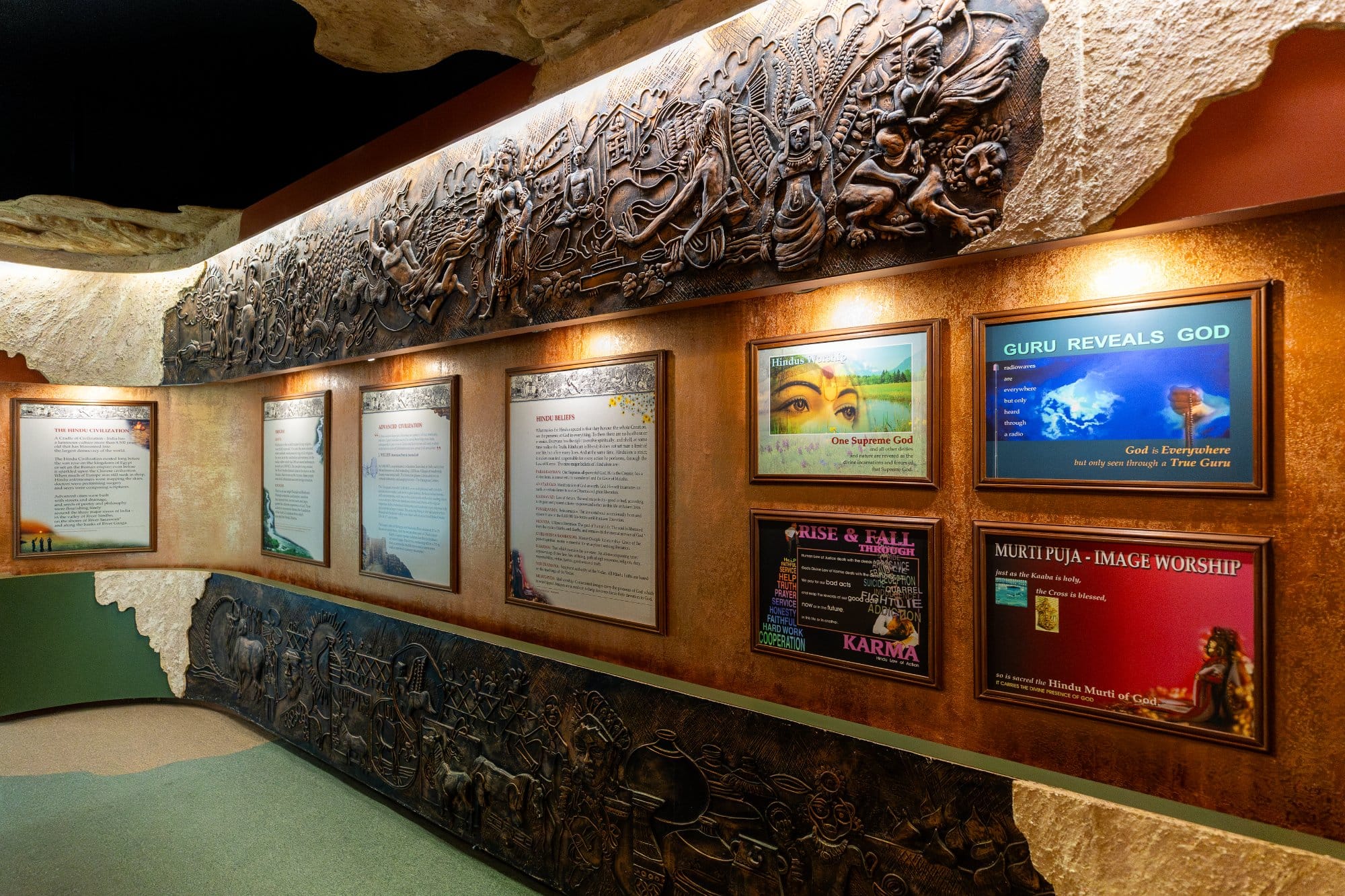
The exhibition takes a much broader view than many visitors might expect.
Its subject is Hinduism, but the presentation also explores India as a civilisation.
BAPS says the exhibition covers India's heritage and its contributions to the world. Its displays discuss subjects including mathematics, astronomy, medicine, education, yoga, physics and other areas of knowledge.
Open Beyond Its Own Community
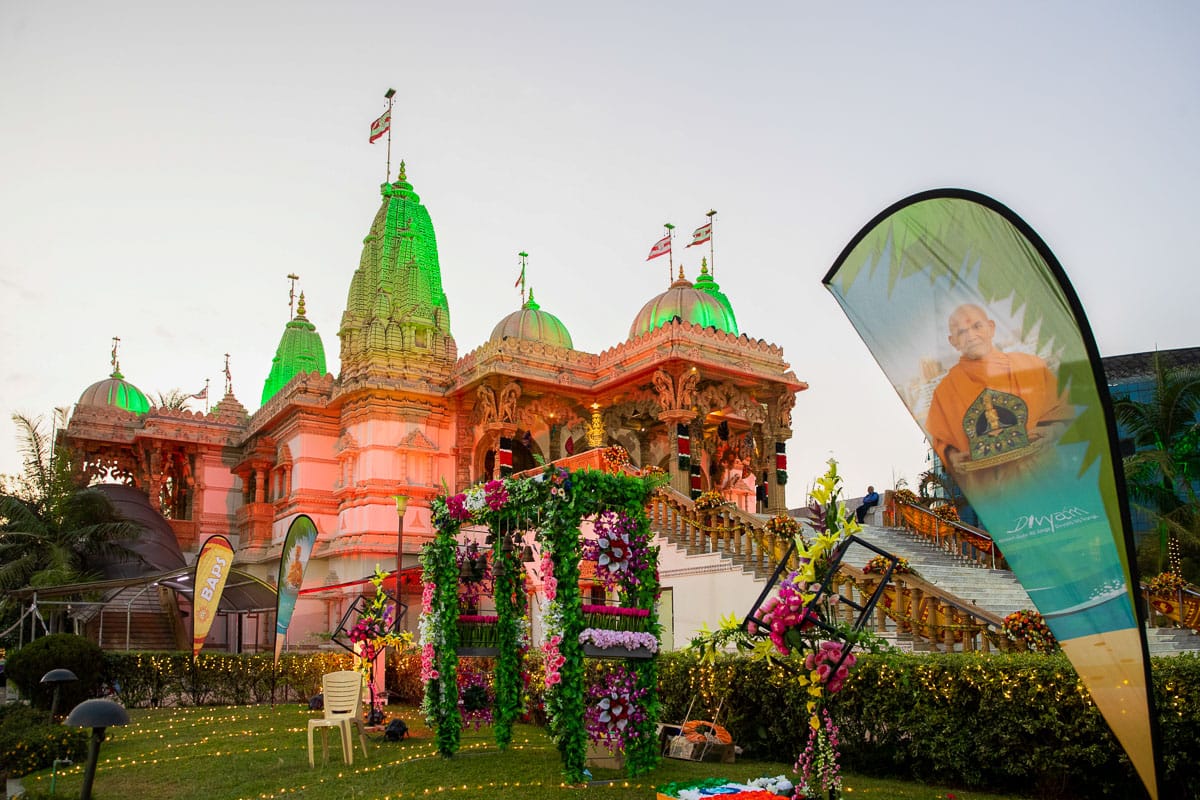
The temple's story also extends beyond the Hindu community.
BAPS describes the Nairobi mandir and its wider activities as spaces for spirituality and community. Its current programme includes children's classes, youth activities, young adult gatherings, Gujarati language classes, weekly assemblies and Mahapuja.
Over the years, the temple has held celebrations and welcomed visitors from diplomats, embassies, corporate to members of other religious communities.
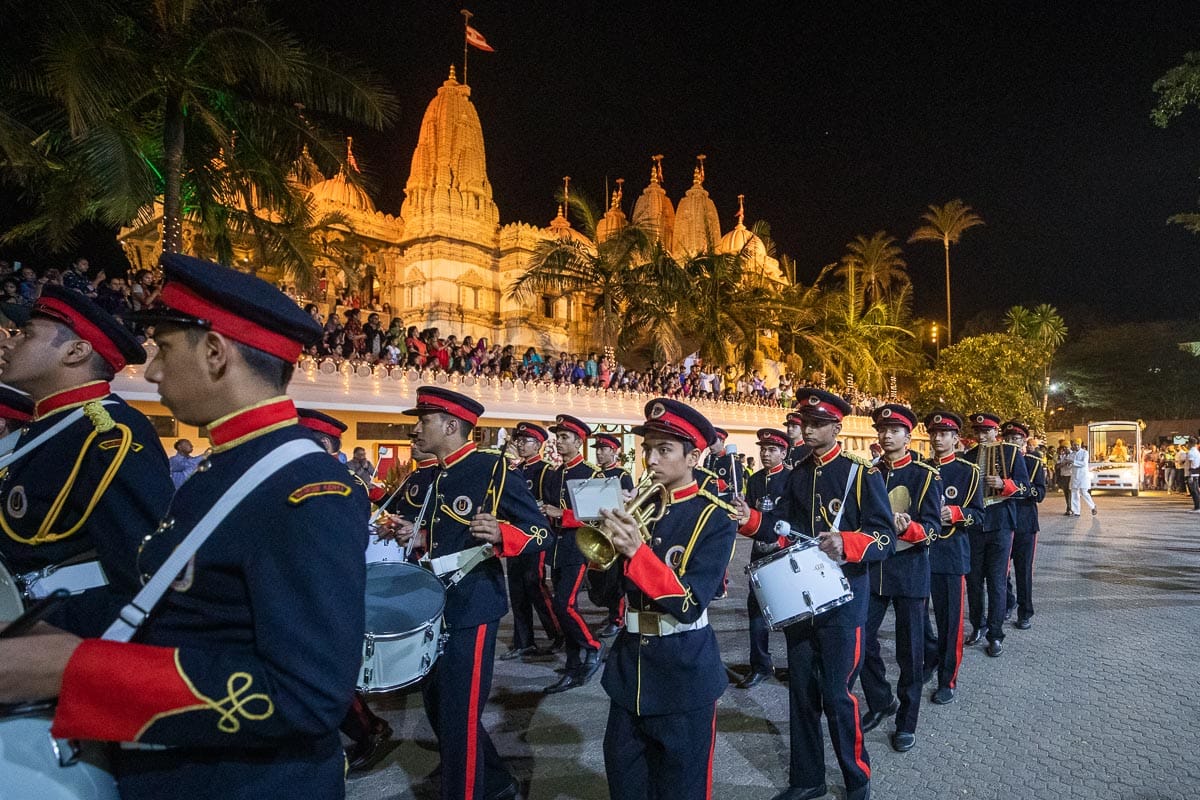
The physical complex also reflects this broader role.
The original project included a Haveli, or cultural and community complex, with facilities including a prayer hall, kitchen, dining hall, assembly hall, administrative offices, gymnasium, dispensary, youth hall and social-services centre.
This is important because it helps explain why BAPS describes the mandir as a place for community.
The BAPS presence in Nairobi also has a humanitarian dimension.
BAPS Charities has worked with partners in Kenya on health initiatives, including cataract surgery programmes with Lions SightFirst Eye Hospital.
For example, in 2023, BAPS Charities Kenya and Lions SightFirst Eye Hospital organised free cataract surgeries for 58 patients, including transport, meals and follow-up care.
A Living Religious Space
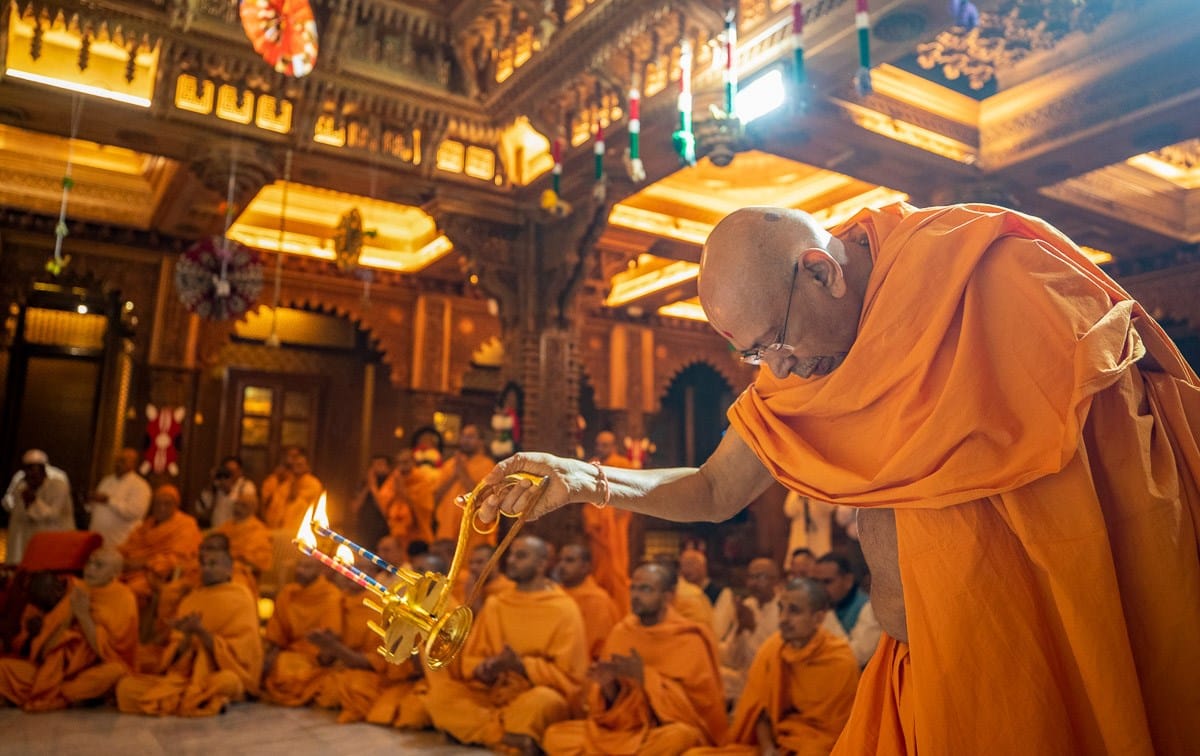
For all the architecture and cultural programming, it is important not to lose sight of what the building actually is. It is a mandir, a place of worship.
Daily rituals remain central to its life. BAPS lists daily arti ceremonies in the morning and evening, while the Abhishek Mandap provides a space where visitors and devotees can perform or witness the abhishek ceremony of Nilkanth Varni.
The current visitor information lists daily opening hours from 8:00am to 12:00pm and 4:00pm to 8:00pm, with specific darshan timings throughout the day.
A Temple That Became Part Of Nairobi
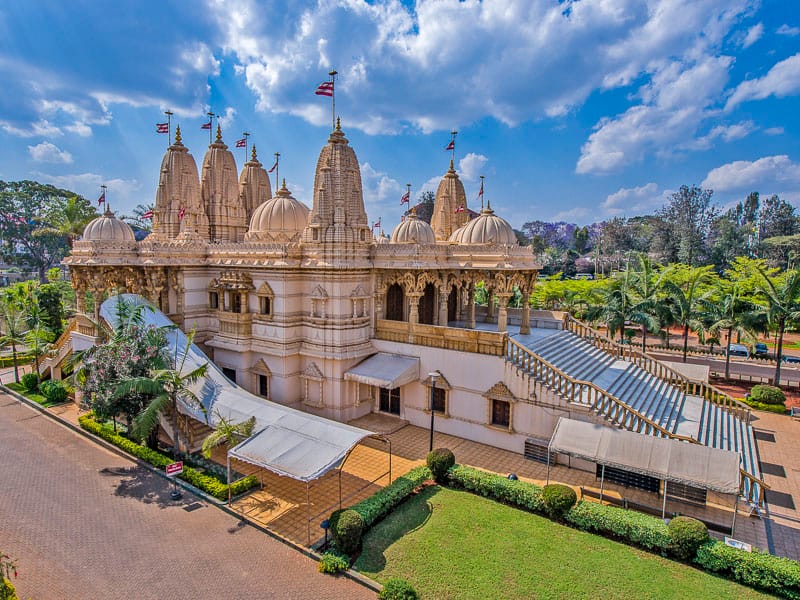
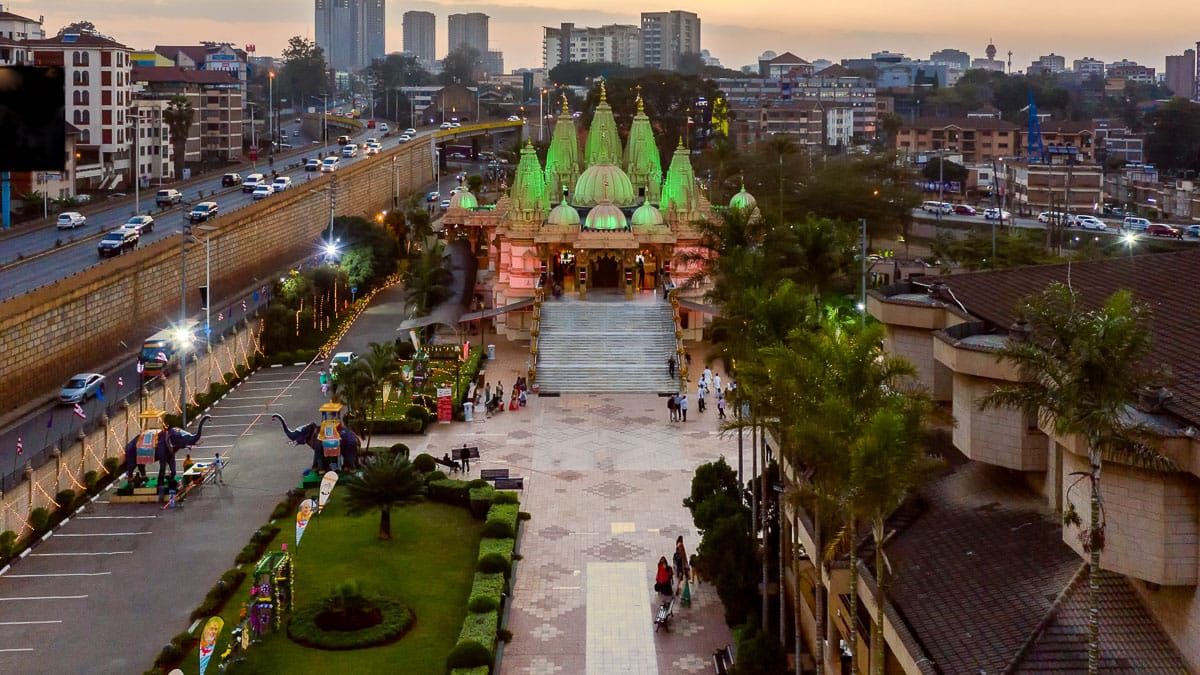
More than 25 years after its inauguration, the BAPS Shri Swaminarayan Mandir has become part of the city's cultural landscape.
Its history now stretches from the early Swaminarayan communities of East Africa to the present day. Its architecture records an extraordinary collaboration between craftsmen, materials and volunteers across countries. Its exhibition gives visitors a way to engage with Hinduism and Indian civilisation beyond the visual spectacle of the building.
And its doors have opened to people far beyond the community that built it. The building looks, at first glance, like a piece of India standing in Nairobi.
Look more closer and you see a story shaped by migration, faith, craftsmanship, education and community. It is Indian in architectural tradition, African in some of its materials and Kenyan in its physical setting and community life.
And it is unmistakably Nairobi in the way it exists at the intersection of cultures, religions, diplomacy and global connections.
Visiting The BAPS Shri Swaminarayan Mandir
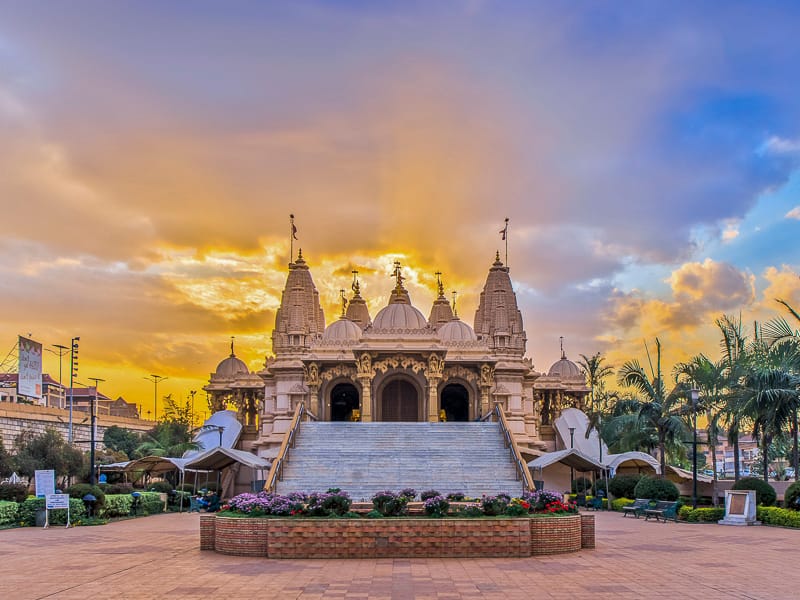
The BAPS Shri Swaminarayan Mandir is located on Prof. Wangari Maathai Road, Nairobi, Kenya. The mandir and heritage exhibition are open to visitors daily, with visiting hours currently listed as 8:00am–12:00pm and 4:00pm–8:00pm.
BAPS states that entry is open to visitors, while guided tours can be arranged in advance. Visitors should check the official visitor information before going because specific darshan and tour arrangements can differ from ordinary visiting hours.
Member discussion