Westlands' Nightlife Economy Reveals Who's Actually Spending, and Where

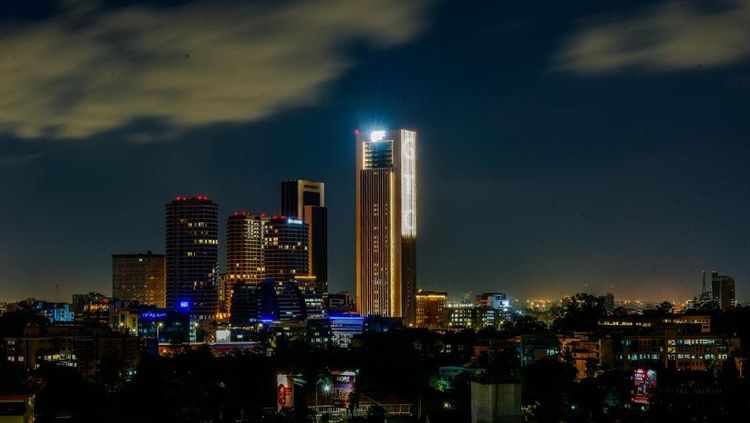
Walk down Woodvale Grove on a Friday night and it's easy to read the scene as one undifferentiated wave of spending, expensive cars, bottle service, cover charges, a neighborhood with money to burn after dark. Look closer at who's actually at each venue, and a more precise picture appears: Westlands' nightlife economy isn't one market. It's four or five distinct ones, stacked on top of each other along the same few streets, each with its own spender, its own price point, and its own reason for being there.
The Corporate Entertainment Tier
The least visible but most consistent spending in Westlands after dark happens in hotel bars, not clubs. Venues like the Tribe Hotel bar and the Crowne Plaza bar function as the neighborhood's default client entertainment infrastructure, reliable, professionally run, and predictable in a way the independent bar scene isn't always built to be. This is expense-account money, business development dinners and client relationship spending that needs a venue capable of handling a corporate booking without drama. It rarely shows up in anyone's account of Westlands nightlife because it doesn't look like nightlife, no cover charge, no door policy, no line, but it's a steady, recurring layer of spend tied directly to the corporate tenant base explored in How Money Actually Moves Through Westlands.
The Bottle-Service Luxury Tier
At the other end sits Westlands' luxury club circuit, anchored by venues like Milan and Bla Bla Nairobi, where bottle service starts around Ksh 15,000 and cover charges alone run Ksh 2,000 to 5,000 on a Friday or Saturday. This tier draws a specific crowd: well-off locals, and tourists looking for the version of Nairobi nightlife that gets described online as East Africa's most interesting club scene.
The Post-Work Professional Middle
Between those two extremes sits the largest and arguably most economically interesting tier: rooftop bars and cocktail lounges like Brew Bistro and Sarabi Rooftop Lounge, where cocktails run Ksh 800 to 1,400, a steak dinner lands around Ksh 1,800, and there's no cover charge most nights at all. This is where Westlands' actual resident and working population spends most consistently, a post-work crowd from roughly six to nine on Friday evenings, often using the rooftop as a staging point before a smaller group peels off toward the clubs later. Sunday afternoon sessions at the same venues have become their own distinct ritual, functioning as Nairobi's answer to bottomless brunch culture and drawing crowds that, by some accounts, now outnumber Monday night club attendance entirely, a quirk tied to Kenya's Monday-heavy public holiday calendar that has effectively shifted the city's real "Friday" earlier in the week for a meaningful share of regular nightlife spenders.
The Value and Underground Scene
A fourth tier has grown specifically in reaction to the luxury end of the market. Venues built around house and techno music, drawing a younger crowd, typically in their early-to-mid twenties, made up heavily of tech workers and art school graduates, deliberately price themselves below the tier: lower cover charges, no bottle service culture at all, and a relaxed, sneakers-fine dress code that stands in deliberate contrast to velvet-rope exclusivity elsewhere on the same streets. Locals who actually live in Westlands, as opposed to visiting for a special night out, increasingly gravitate toward this tier and the mid-range rooftop scene precisely because bottle-service pricing at the top end has become genuinely out of reach for regular, non-occasion spending. Prime examples here include The Alchemist, Muze club and KODA, as well as The Mall Underground Party scene.
What This Reveals About Who's Actually Spending
Put these tiers side by side and a clearer story emerges than "Westlands is expensive." The neighborhood is actually running four parallel economies simultaneously: expense-account corporate spend that never touches a cover charge, luxury discretionary spend from diplomats, tourists, and Nairobi's wealthiest residents, steady middle-income professional spend concentrated around the post-work and Sunday-session rhythm, and a genuinely price-conscious younger scene carving out its own lower-cost alternative in direct response to what the top tier now costs. A single Friday night in Westlands might involve all four of these economies operating within a few hundred meters of each other, largely invisible to one another.
The Part the Current Boom Obscures
It's worth being honest about something the current Westlands nightlife narrative tends to skip past: this concentration of spending in one neighborhood is a relatively recent development, and it has come at a real cost elsewhere in the city. Nairobi's actual clubbing golden era predates Westlands' dominance entirely, centered through the 1990s on CBD institutions that no longer exist in anything like their original form. The decline of that CBD club economy didn't just close a few venues. It measurably shrank an entire informal economy that depended on it, street vendors who sold food outside clubs, cab drivers who worked the late-night CBD circuit, musicians and bouncers whose livelihoods were tied to venues that have since closed. Some of that displaced spending migrated to Parklands and Lang'ata through the 2000s before eventually consolidating into the Westlands and Kilimani corridor that dominates today. The city's nightlife spend hasn't simply grown, in important ways it has relocated and concentrated, leaving genuine economic casualties in the neighborhoods it left behind.
Regulation Is Now Shaping Where This Goes Next
Nairobi County's more recent regulatory posture adds another layer worth watching. Rules introduced under the current county administration restrict new nightclub licenses in residential areas, impose regulated operating hours, and require mandatory soundproofing for venues near housing, a direct response to noise and residential-zoning tension that Westlands' own rapid apartment construction, detailed in our Expressway and Gigiri coverage, has made increasingly urgent. These rules don't threaten Westlands' existing, already-licensed venues, but they do meaningfully constrain where the next wave of nightlife expansion in Nairobi can physically happen, likely reinforcing Westlands' existing concentration rather than allowing it to spread, since new entrants increasingly can't open in the residential zones where demand is actually growing.
The Quiet Counter-Trend Running Alongside All of This
It's also worth setting this spending story against its own generational counterpoint. As we explored in The Quiet Party: Inside Gen Z's Global Shift Toward Soft Socializing, a meaningful share of Nairobi's younger population is actively opting out of exactly this spending economy altogether, gravitating instead toward alcohol-free gatherings, running clubs, and board-game cafés that cost a fraction of even the value tier described above. That's not a contradiction of the nightlife spending story, it's the other half of it. Westlands' four-tier nightlife economy and Nairobi's growing sober-curious scene are drawing from the same generational pool of discretionary spending, and increasingly, from the same cost-of-living pressures that make a Ksh 15,000 bottle of vodka a genuinely different proposition for a young professional today than it might have been a decade ago.
Where someone spends their Friday night in Nairobi right now says less about their income alone than it does about which of these several, quietly parallel economies they've chosen to belong to.
Sources
- Realtors.co.ke, "Nightlife & Entertainment in Westlands Nairobi (2026 Guide)" — corporate entertainment venues and club scene overview
- BestKenya, "Nairobi Nightlife Guide: Best Bars, Clubs & Live Music 2026" — venue pricing, crowd demographics, and weekly rhythm patterns
- BestKenya, "Best Clubs in Nairobi: 2026 Guide" — cover charges, bottle service pricing, and safety practices
- Daily Nation, "Nairobi after dark: Why city's nightlife is shifting from clubs to eateries" — historical CBD club economy, informal economy impact, and county regulatory changes
- The Discreet Gentleman, "Nairobi Nightlife, Kenya: Districts, Venues, Safety 2026" — district-level demographic breakdown
- The Skyline Collection, "The Real Cost of Living in Nairobi — A Complete Breakdown" — typical night-out spending figures



Member discussion