
Why Gigiri and Kitisuru Are Nairobi's Diplomatic Rental Strongholds
A closer look at Rule 2 from Eight Rules for Buying Property in Nairobi
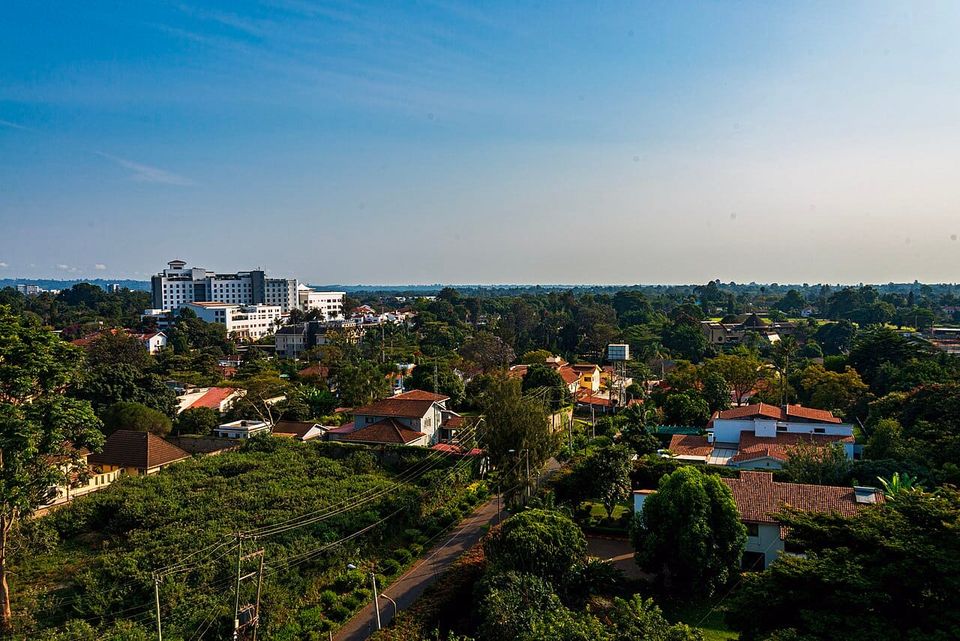
Most Nairobi neighborhoods compete for tenants. Gigiri largely doesn't have to. It is one of the few suburbs in the city where rents are quoted and paid in US dollars as a matter of course, where vacancy on quality furnished homes sits under 5 percent, and where the tenant base is less a market than a fixed institutional population that simply needs somewhere to live. Understanding why reveals one of the clearest, most durable patterns in Nairobi property, and why its overflow effects reach well beyond Gigiri's own borders.
The Institution That Built the Neighborhood
Gigiri exists as a diplomatic address because of what sits inside it. The United Nations Office at Nairobi, headquarters to the UN Environment Programme and UN-Habitat, hosts dozens of UN agencies, funds, and offices, along with the sprawling United States Embassy compound and the missions of several other countries, including Chile, Malaysia, Oman, Poland, and Senegal. The area also hosts the International Civil Aviation Organization's regional base for Eastern and Southern Africa.
The scale of this presence is easy to underestimate from the road. Recent figures put the number of UN offices in Nairobi at 86, with 73 of them located inside the Gigiri complex specifically, employing more than 6,500 staff who bring an estimated 11,000 dependents with them. Every one of those households needs housing, and nearly all of them arrive with a fixed housing allowance rather than a mortgage to negotiate, typically in the range of $3,000 to $8,000 a month, paid by their employer, not stretched from personal savings.
That single fact changes the entire character of the rental market. Property in Gigiri isn't competing for tenants who might choose to spend less. It's competing for tenants who have already been allocated a housing budget and need to spend close to all of it, on a home that meets specific security, space, and proximity requirements set by their employer, not by personal preference.
What Actually Anchors the Premium
Three institutions do most of the work of keeping Gigiri's rental demand structurally high, and none of them are the UN itself.
International schooling is the first. Rosslyn Academy sits on a 40-acre campus inside Gigiri, a stone's throw from the US Embassy and the UN complex, and has served the area's missionary, diplomatic, and business community for over 75 years. The Deutsche Schule Nairobi, Germany's curriculum school, sits directly opposite Village Market on the same few square kilometers. The International School of Kenya is a similarly short drive away. For a diplomatic or expatriate family relocating with children, proximity to this cluster of schools is often non-negotiable, which anchors housing demand to the immediate area regardless of what's happening in the wider Nairobi market.
Retail and lifestyle infrastructure is the second. Village Market and the newer Rosslyn Riviera shopping centre give the area's international residents the specific mix of imported goods, familiar dining, and social space that's hard to replicate elsewhere in the city, reinforcing Gigiri's pull as a genuinely self-contained expatriate ecosystem rather than just a secure place to sleep.
Security infrastructure is the third, and arguably the most important. Gigiri is among the most heavily patrolled residential districts in Nairobi, a direct consequence of housing an unusually dense concentration of diplomatic missions and international staff. Gated compounds, controlled access, and round-the-clock security are the norm rather than the exception, and for institutions setting housing policy for their staff, that security profile is frequently a hard requirement, not a preference.
Why the UN's Expansion Matters More Than Any Single Deal
Gigiri's rental market doesn't move on ordinary supply-and-demand cycles. It moves on staffing decisions made inside UN agencies and embassies, which makes recent developments at the UN's Nairobi campus directly relevant to anyone holding property in the area.
As the UN's Gigiri campus expansion proceeds, with new staff expected across agencies including UNICEF, the UN Population Fund, and UN Women, property analysts are projecting rental price increases in the area of 10 to 15 percent, with some more optimistic estimates for Gigiri specifically running as high as 15 to 20 percent. Developers have already started responding directly, with at least one local firm launching a housing project explicitly marketed to incoming UN staff.
This is worth sitting with, because it's a genuinely unusual dynamic in Nairobi real estate. Most neighborhoods respond to broad economic conditions, interest rates, general population growth, infrastructure access. Gigiri responds, disproportionately, to headcount decisions made inside a handful of international institutions. That makes it one of the most predictable rental markets in the city for anyone paying attention to UN and embassy staffing announcements, and one of the more opaque ones for anyone who isn't.
It's also worth being honest about the market's recent volatility. Gigiri experienced a real price correction in 2025, as some international agencies scaled back operations in Nairobi, and land prices across Gigiri, Kitisuru, and neighboring Nyari cooled after several quarters of heated pricing tied to the diplomatic zone's expansion. Properties sitting closest to the active UN and embassy perimeter held their value noticeably better through that correction than those on the area's outer edges, underlining that proximity within Gigiri, not just proximity to Gigiri, is what actually protects value here.
Kitisuru: The Overflow Valve
Kitisuru sits immediately south of Gigiri along Lower Kabete Road, and its investment case is almost entirely positional. When Gigiri's housing supply can't keep pace with diplomatic and UN demand, which recent reporting suggests is happening consistently given how tight vacancy has become, Kitisuru is the first neighborhood that overflow tenants look to.
It earns that role because it genuinely shares Gigiri's core advantages rather than offering a diluted version of them. The same international school cluster, Rosslyn Academy and the International School of Kenya, sits within ten to fifteen minutes. The same retail anchors, Village Market and Westgate, are comparably close. The same tenant profile applies: senior diplomats who want more land and space than Gigiri's tighter townhouse clusters typically offer, UN staff, multinational executives, and established Kenyan families who prioritize privacy and security over central location.
What Kitisuru offers that Gigiri increasingly can't is space and price. Larger plots, typically half an acre or more, on Gigiri-adjacent land at meaningfully lower per-square-foot cost. Five-bedroom homes here list from roughly Ksh 85 million, with larger properties exceeding Ksh 300 million at the top end, and monthly rents in the broad Ksh 300,000 to 450,000 range, comparable in character to Gigiri's own pricing but with considerably more land attached to it.
The Practical Read for Buyers
Three things follow from all of this, and they hold whether you're buying in Gigiri directly or its Kitisuru overflow.
The tenant base in both neighborhoods is close to recession-proof by Nairobi standards, because it isn't drawn from the general economy. It's drawn from institutional housing allowances that get paid regardless of what's happening to local incomes or interest rates elsewhere in the city. That's precisely why prime rentals across this corridor have stayed resilient even as speculative apartment supply elsewhere in Nairobi has softened.
That resilience is not the same as immunity. The 2025 correction across Gigiri, Kitisuru, and Nyari is a real reminder that this market moves on institutional staffing decisions, and staffing decisions can go down as well as up. Buying here is a bet on the UN and diplomatic presence in Nairobi continuing to grow, which the current campus expansion strongly supports, not a bet that is entirely without cycles of its own.
And within that bet, proximity still has gradients. The properties that held value best through the last correction were the ones closest to the actual UN and embassy perimeter, not simply the ones within the broader Gigiri-Kitisuru corridor. For a buyer weighing the two neighborhoods, or weighing one plot against another inside either of them, that gradient is the detail worth checking before anything else.
Sources
- Wikipedia, "Gigiri" — overview of embassies, UN presence, and ICAO regional base
- Wikipedia, "Rosslyn Academy" — school history and Gigiri campus location
- Expat Arrivals and Doris School Guide, international school directories for Nairobi
- Serrari Group, "UN's Global Shift Transforms Nairobi's Premier Real Estate Landscape" — UN staffing figures, rental price projections, and developer response
- Sarabi Realty Group, "Best Estates Nairobi (2026): What to Know Before You Rent or Buy" — Kitisuru positioning, tenant profile, and the 2025 Gigiri price correction
- VillaWatch Kenya, "Gigiri Nairobi Property Guide 2026" — rental yields, tenant income profile, and dollar-denominated rent norms
- Pam Golding Properties Kenya, Gigiri area profile — anchor institutions and lifestyle infrastructure
- Milele Homes, "Apartment Saturation in Nairobi: What It Really Means for the Prime Market" — resilience of prime diplomatic-corridor rentals against broader market softening
- Financial Fortune Media, reporting on HassConsult land price data for Kitisuru, Nyari, and Gigiri




Member discussion