
Why Kenya Is Running on Volcanic Power
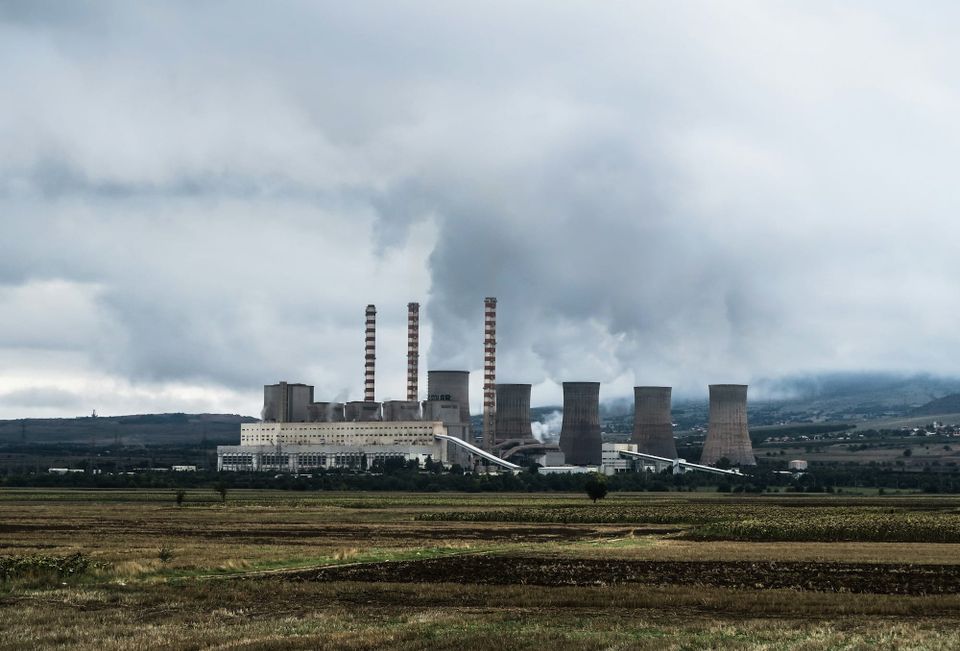
Ninety minutes northwest of Nairobi, past Naivasha, steam rises out of the ground in thick white columns visible from the road. It looks almost apocalyptic against the golden grass of the Rift Valley floor, and in a very literal sense, it's the reason a large share of the lights in Nairobi stay on. This is Olkaria, and Kenya has quietly built one of the most consequential energy stories in the world around it.
What Volcanic Power Actually Is
Geothermal energy, or volcanic power, works by tapping the Earth's own subterranean heat, magma sitting kilometers below the surface, and converting it directly into electricity. Wells drilled deep into the ground bring up superheated steam, sometimes reaching temperatures above 300 degrees Celsius, which drives turbines the same way steam from a coal or gas plant would. The difference is that nothing needs to be burned to produce it. The heat is already there, generated by the planet itself, and it isn't going anywhere.
Why Kenya, Specifically
Kenya's advantage here isn't policy or investment alone, it's geology. The country sits directly on the East African Rift System, one of the most tectonically and volcanically active regions on the planet, where the African continent is slowly splitting into two separate tectonic plates. That activity has left the Rift Valley floor riddled with active and dormant volcanoes acting as natural underground heaters, exactly the geological conditions that make large-scale geothermal extraction possible in the first place. Very few countries in the world have this kind of geology sitting this close to a major population center.
Inside the Olkaria Complex
The physical center of Kenya's geothermal story is the Olkaria Geothermal Complex, located within and around Hell's Gate National Park near Naivasha, roughly 90 to 100 kilometers from Nairobi. Kenya's geothermal journey started here in 1981, when Olkaria I came online as the first geothermal power plant built anywhere in Africa, initially just three modest 15-megawatt units.
What's grown from that starting point is now one of the largest geothermal complexes on Earth. Successive plants, Olkaria I through to the currently proposed Olkaria VII, have been added over four decades, with wells reaching depths of up to three kilometers to access steam fields running as hot as 350 degrees Celsius. The site is operated primarily by KenGen, Kenya's state-owned electricity generator, though the sector isn't entirely public: OrPower4, a subsidiary of the American firm Ormat Technologies, built and operates Kenya's first privately owned geothermal plant on the same fields, and newer additions like Olkaria VI are being developed under public-private partnership arrangements with strategic co-investors.
One detail that captures the strangeness and success of the site at once: Hell's Gate remains a functioning national park, and giraffes and zebras graze within sight of active steam pipelines, geothermal infrastructure and wildlife tourism coexisting on the same patch of Rift Valley floor.
The Numbers, and Why They Keep Moving
Kenya's installed geothermal capacity has climbed steadily for years, crossing roughly 863 megawatts by 2022 and continuing to grow with each new Olkaria unit brought online since, putting current capacity close to 1,000 megawatts. That growth has repeatedly reshuffled the global rankings: Kenya overtook Iceland in total installed geothermal capacity back in 2019, and by 2022 had climbed as high as seventh place globally on international renewable energy rankings, comfortably inside the world's top ten geothermal producers, an extraordinary position for a country whose overall electricity grid is a fraction of the size of the countries surrounding it on that list.
Reported figures for geothermal's share of Kenya's national grid vary somewhat depending on the year and source, generally landing somewhere between 40 and 48 percent, a reflection of just how quickly new capacity has been added in recent years rather than any real disagreement about the trend. Combine geothermal with Kenya's other renewable sources, hydro, wind, and a growing solar sector, and the country's electricity grid runs on somewhere between 85 and 90 percent renewable energy overall, a figure most industrialized economies are still decades away from reaching.
Why Baseload Reliability Actually Matters
The specific value of geothermal power, as distinct from Kenya's other renewable sources, comes down to one word: reliability. Solar power disappears at night and drops during cloud cover. Wind depends entirely on weather conditions that can't be controlled or fully predicted. Geothermal has neither limitation. Once a well is producing steam, it can run continuously, day and night, regardless of season or weather, often operating at full capacity for more than 8,600 hours out of a possible 8,760 in a given year, a capacity factor few other power sources can match.
That reliability is what energy planners call baseload power, the steady, always-on foundation a national grid needs underneath its more variable renewable sources. Kenya's unusually large geothermal baseload is precisely what allows it to lean so heavily on renewables overall without the stability problems that trip up grids elsewhere when they try to scale wind and solar too quickly without an equivalent steady backbone underneath them.
The Broader Case for Geothermal
Beyond Kenya's specific numbers, geothermal power carries a handful of structural advantages that make it unusually attractive as a long-term investment, wherever it's developed. Geothermal plants have a remarkably small physical footprint relative to their output compared to solar or wind farms generating equivalent power. Emissions are dramatically lower than fossil fuel generation, since nothing is being combusted. Once built, geothermal infrastructure is also exceptionally long-lived, plants routinely operate for 80 to 100 years with comparatively modest maintenance requirements, a lifespan far beyond what most other power generation technologies can offer. And because geothermal projects require sustained, specialized drilling, engineering, and plant operation work, they tend to generate more permanent technical and construction employment per megawatt installed than most other renewable technologies.
Kenya's geothermal heat is also doing more than just generating electricity. Around Naivasha, geothermal steam is used directly to heat greenhouses supporting the country's flower export industry and to pasteurize milk, processes that previously relied on expensive diesel generation and now run on the same underground heat powering the national grid.
What Comes Next
Kenya's own estimates put the Rift Valley's untapped geothermal potential at up to 10,000 megawatts, roughly ten times current installed capacity, almost all of it still sitting undeveloped beneath the ground. The government's stated ambition is a fully clean national electricity grid by 2030, an interim milestone on the way to the larger 10,000-megawatt geothermal build-out, which industry timelines put closer to the late 2030s given the scale of drilling and infrastructure still required.
Reaching that target is expected to depend on a mix of financing models rather than public investment alone: public-private partnerships similar to the Olkaria VI arrangement, direct investment through KenGen, which trades publicly on the Nairobi Securities Exchange, and industrial partnerships with international engineering and energy firms already active in the sector. International backing, including financing tied to Kenya's geothermal expansion, has continued to flow into the sector precisely because the underlying economics, a renewable resource with an 80-to-100-year operating life and near-continuous output, are unusually favorable once the upfront drilling and plant costs are financed.
For a country most of the world still associates with safari tourism, Kenya's position as one of the planet's leading geothermal producers remains one of its most underappreciated achievements, and one that's been building steadily, ninety minutes from Nairobi, since 1981.
Sources
- KenGen, Geothermal Energy Generation overview
- ThinkGeoEnergy, "Global geothermal capacity reaches 14,900 MW - new Top 10 ranking of geothermal countries"
- VUKA Group, "Olkaria project drive Kenya's geothermal energy ambitions"
- The Kenyan Wallstreet, "Kenya ranked 8th largest geothermal power producer in the world"
- Africa Sustainability Matters, "Shedding Light On Kenya's Geothermal Power Plants"
- Mitsubishi Power, "Geothermal Power for Sustainable Development in Kenya"
- Wikipedia, "Olkaria I Geothermal Power Station" and "Olkaria VI Geothermal Power Station"
- Enel, "Advantages of Geothermal Energy"
- Turboden, "Potential and Benefits of Geothermal Energy"
- Bluence, "Geothermal Energy Advantages and Disadvantages"





Member discussion